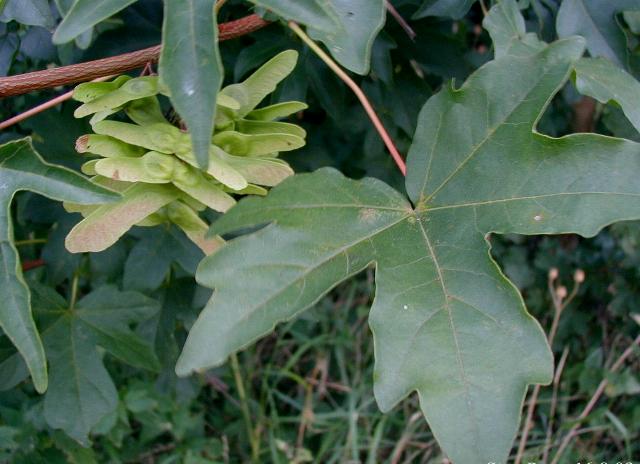
The mixed broadleaf woodlands of central Italy — the zone running from the southern Po plain through Tuscany, Umbria, and Marche to the northern fringes of Lazio — contain a recurring stand type that forestry literature has variously called cerreta mista (mixed Turkey-oak wood), querceto misto, or simply collinare misto. Within these stands, Acer campestre and Carpinus betulus appear as consistent subdominants across a wide altitude range, and in specific site conditions — north-facing slopes, valley floors, and frost-hollow margins — they co-dominate or even displace the oaks.
This article examines the species composition of Acer–Carpinus dominated stands in three survey areas: the hills of northern Umbria (Città di Castello to Gubbio), the Marche Apennines between Fabriano and Camerino, and the Tiber valley corridor in central Lazio. Observations were recorded between 2021 and 2024 across 47 permanent sample plots established on a 500 m grid within each survey area.
Acer campestre: site preference and stand behaviour
Acer campestre (field maple) is among the most ecologically versatile of Italy’s native hardwoods. It tolerates a wide range of soil conditions from calcareous clays to siliceous loams, and its altitudinal range in the survey areas extended from 180 m to just under 900 m. At the lower end of this range, it occurred predominantly as a large shrub or multi-stemmed coppice stool at stand margins and along hedgerows embedded in agricultural land; at higher elevations, it formed canopy-height trees of 15–22 m in closed woodland.
In the survey plots, Acer campestre was recorded in 39 of 47 plots. Its basal area share exceeded 20% in 14 plots — all of which were located on north-facing aspects between 400 and 750 m. In no plot did it form a monospecific stand; it always occurred in combination with at least one oak species, and usually with Carpinus betulus, Ostrya carpinifolia, or both.
Resprouting vigour after coppice cutting was consistently high for stems below 15 cm diameter at breast height. Stools with stems above 20 cm showed more variable response, with some producing only two or three weakly growing shoots in the first post-cut growing season. This observation is consistent with published literature on field maple stool longevity and suggests that on sites managed under long-rotation or irregular cutting regimes, Acer campestre stools may be approaching the end of their productive life in some stands.
Carpinus betulus: distribution and competitive dynamics
Carpinus betulus (European hornbeam) was recorded in 35 of the 47 plots. Its presence was strongly correlated with soil moisture retention and with altitude: below 350 m on south-facing slopes it was absent or present only as scattered individuals; above 600 m on north-facing slopes it was recorded in 28 of 30 plots with that combination of aspect and elevation.
Where hornbeam was abundant (basal area share above 15%), it was typically the tallest species in the understory and lower canopy, competing effectively with both oak and maple for light. In stands that had not been cut for 30 or more years, hornbeam had in several cases overtopped field maple and begun to suppress it, suggesting that the competitive balance between the two species is partly a function of cutting history. In actively managed coppice with rotation lengths of 18–22 years, hornbeam and maple maintained roughly equal canopy positions.

Associated species and elevation gradients
The third consistent element in the survey plots was Ostrya carpinifolia (hop hornbeam), which occurred in 30 of the 47 plots and reached canopy dominance on several south-facing, shallow-soil sites between 550 and 800 m — conditions where both Acer campestre and Carpinus betulus were poorly represented. At these sites, Ostrya carpinifolia formed dense, even-canopied coppice stands of low economic value but high structural uniformity.
A secondary group of associated species — Fraxinus ornus (manna ash), Sorbus torminalis (wild service tree), and Prunus avium (wild cherry) — occurred at low densities in 18–22 plots each, typically as scattered individuals rather than as stand components. Their distribution did not follow the aspect and moisture gradients that governed Acer campestre and Carpinus betulus, and they appeared to reflect site history (proximity to former agricultural land, presence of pre-existing standard trees) more than current environmental conditions.
Implications for forest management
The survey data support two practical observations relevant to landowners managing mixed Acer–Carpinus woodland in central Italy.
First, the competitive dynamics between maple and hornbeam are sensitive to cutting frequency. In stands where economic returns from coppice are marginal and cutting is irregular, hornbeam tends to gain canopy dominance at the expense of maple over two to three rotation periods. If the maintenance of maple in the stand composition is a management objective, cutting intervals should not exceed 20–22 years on sites where both species are well represented.
Second, Acer campestre in these stands is producing seed at elevations well above those typically covered by nursery stock from lowland certified seed sources. Where provenance-specific seed is required for restoration planting in the 600–900 m elevation band, the material should be sourced from stands at comparable altitude — a constraint that is not always met by the available certified seed lots in the national register.
Sources and further reading
- Pignone, D. (2012). Flora d’Italia (2nd ed.). Edagricole, Bologna.
- Susmel, L. (1988). Normalizzazione delle foreste alpine. CLEUP, Padova.
- Blasi, C. et al. (2004). “Phytosociology and plant ecology of the mesophilous mixed woodlands in central Italy.” Plant Biosystems 138(2): 189–210. doi:10.1080/11263500412331323349
- Piovesan, G. et al. (2005). “Beech forests in Italy: extent, carbon stocks, and future management.” Forest Ecology and Management 205(1–3): 25–42.
- ISTAT (2021). Foreste e boschi in Italia. Statistiche Report. istat.it